Mill file — product dossier
Beech Plywood
Beech plywood is a hardwood panel pressed from European beech (Fagus sylvatica) veneers — denser and harder than birch plywood, with a fine, uniform face that machines and finishes cleanly. This guide covers specifications, grades, thicknesses, pricing and ordering, written by Cildro, a beech plywood mill in Romania, EU, pressing beech since 2013.
Feel the panel first — raw & phenolic, multiple grades, full sample box ships in 48h. Order free samples.
What is beech plywood?
Beech plywood is built from peeled beech veneers — at our mill, roughly 2.6 mm per ply — laid with the grain alternating long and cross, then bonded under heat and pressure. The result is a panel that behaves like engineered hardwood: dimensionally stable in both directions, heavy, stiff, and hard right through the face.
Cildro panels are 100% beech in every single ply. There are no poplar or softwood filler cores hiding inside the sandwich — the property sheet you read below applies to the whole panel, not just its face veneer.
That single-species core is what separates true beech plywood from “beech-faced” panels sold in DIY stores, which carry a beech look on a lighter, softer core and share none of beech’s screw-holding or dent resistance.
Why beech instead of birch?
Baltic birch earned its reputation honestly — but European beech is simply the denser, harder species, and since the EU restricted Russian and Belarusian birch, it is also the panel that is actually available, in stock, with clean EU paperwork.
| Property | Cildro beech | Baltic birch | Softwood ply |
|---|---|---|---|
| Density | 750 kg/m³ | ~650 kg/m³ | ~450 kg/m³ |
| Surface hardness | ≥25 N/mm² Brinell | medium | low |
| Bending strength | 75 N/mm² longitudinal | medium | low |
| EU supply status | EU-origin, in stock | supply-restricted | available |
Denser fibers hold screws tighter, resist dents in service, and take CNC detail without fuzzing. We put the three species through the same ball-impact comparison — see the full beech vs birch breakdown here.
Beech plywood specifications
| Property | Value | Standard |
|---|---|---|
| Density | 750 kg/m³ | EN-323 |
| Moisture | max 8% | EN-322 |
| Emission class | E1 | EN-717-1 |
| Bending strength | 75 N/mm² longitudinal / 68 transverse | EN-310 |
| Modulus of elasticity | 8300 / 7100 N/mm² | EN-310 |
| Surface hardness | ≥25 N/mm² Brinell | — |
| Bonding | Class 2 — protected exterior environments; phenolic (dark glue line) or melamine (light glue line) | EN-314-2 |
| Thickness range | 4–60 mm | EN-315 |
| Panel sizes | 2500×1500 / 2500×1250 mm + custom | — |
Full traceability and documentation ship with every order: FSC, E1, EUDR-compliant, REX registered, EU origin.
Beech plywood grades, with real faces
Photographs below are real mill-floor faces, not renders — the same panels you can inspect grade-by-grade in our interactive showroom. Choose a grade and you know exactly what arrives on your truck.
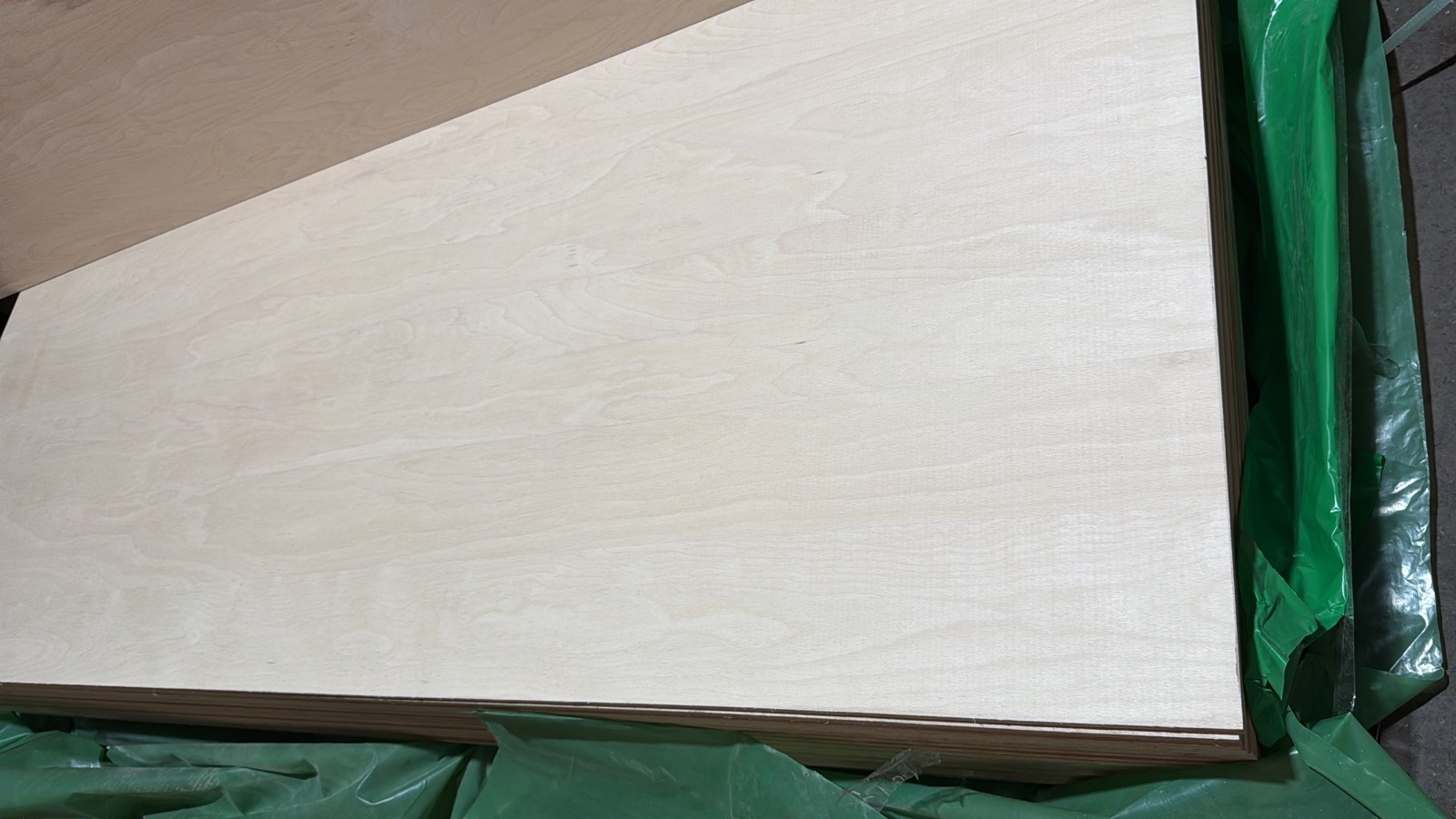
Real mill-floor face. Request the full grade catalogue with your quote.
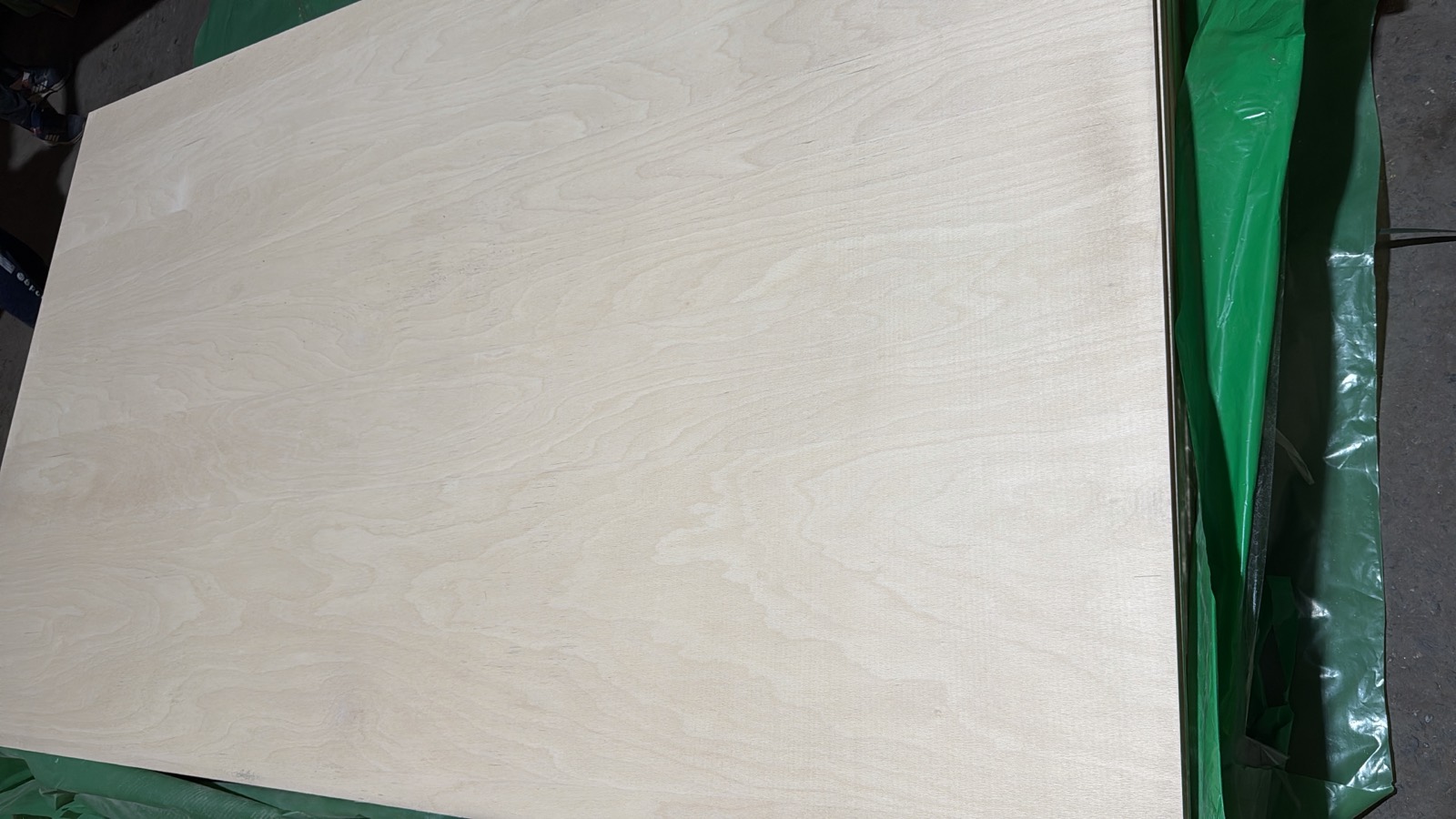
Uniform color, minimal to no difference in coloration, no defects.
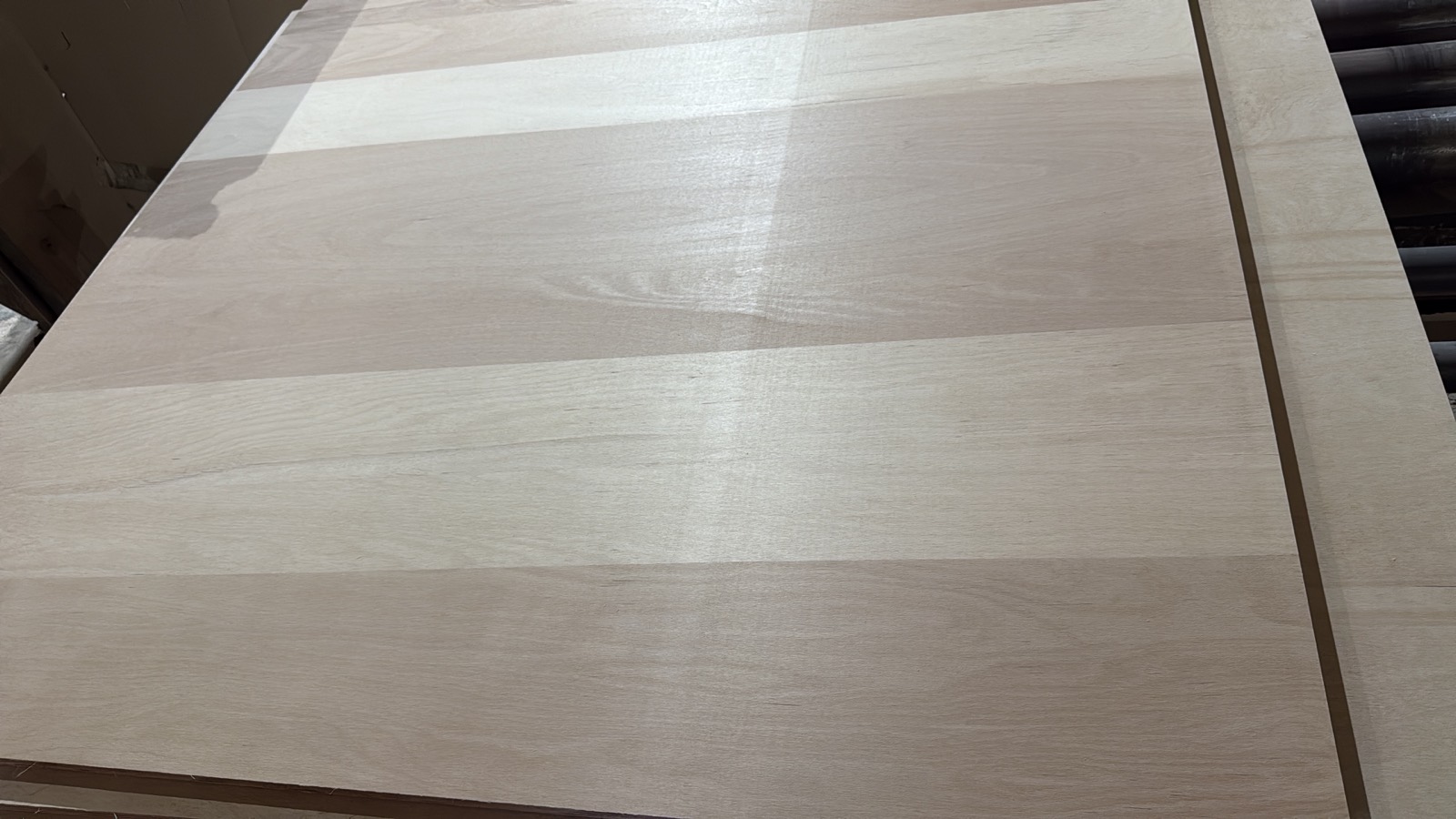
Light natural character; a clean face for visible work under finish.
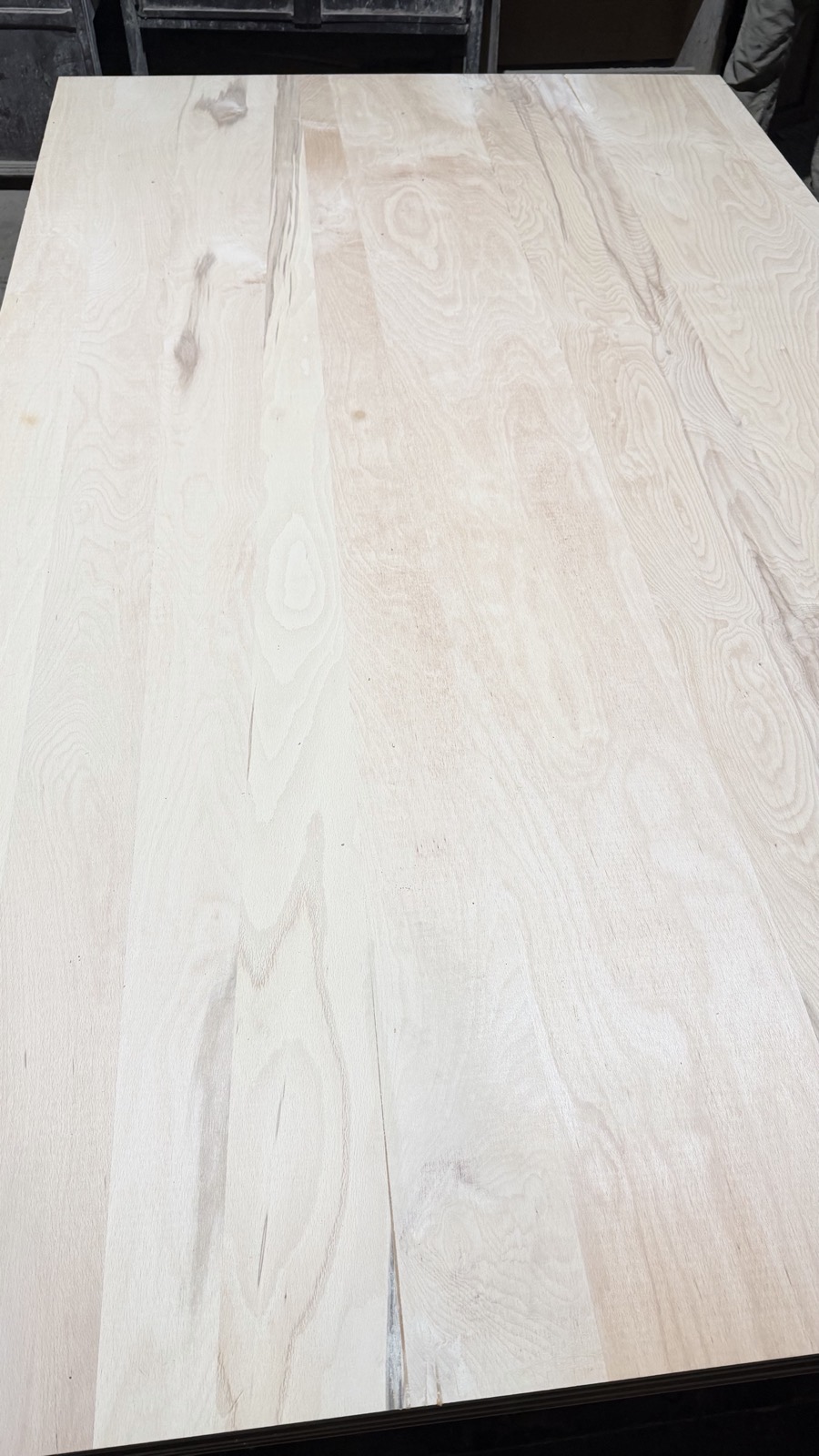
More natural variation; the workhorse for structural and hidden faces.
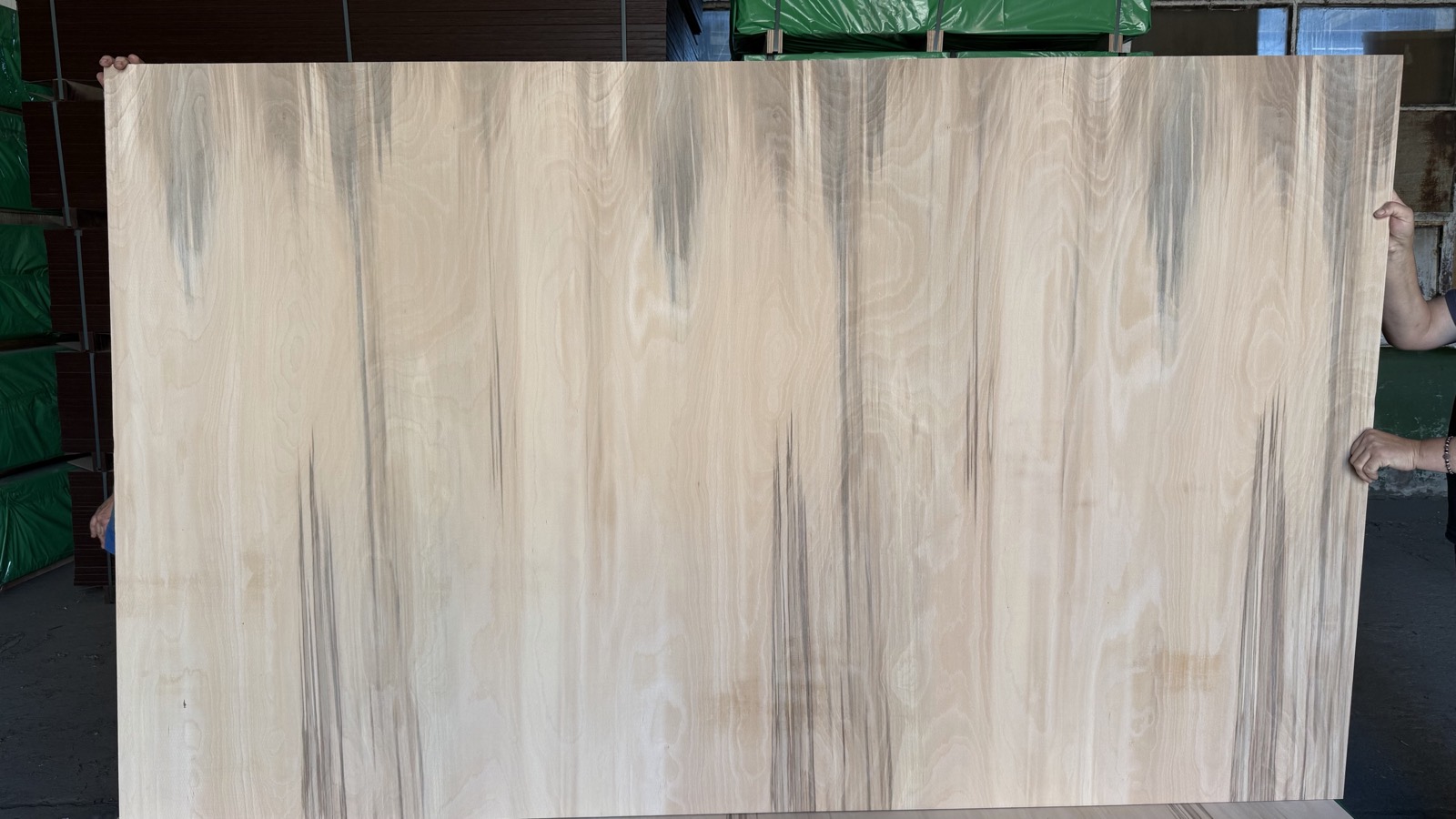
Full natural character, priced accordingly — where looks don’t matter.
Grade allocations follow the mill catalogue — ask for the full grade specification with your quote and we’ll match grades to each face of your panel.
One beech, built three ways
- Cildro Natural — our flagship: raw, finely sanded natural beech for furniture, joinery, shopfitting and worktops.
- Fagotex — phenolic film-faced, anti-slip beech for trailer floors, van linings and vehicle bodies.
- Cildro Core — structural-grade beech for load-bearing, heavy-duty work.
What beech plywood is used for
Because the hardness runs through every ply, beech plywood is specified where panels take real abuse:
- Furniture & cabinetry — exposed edges polish like solid wood; screws bite and stay put.
- Worktops — ≥25 N/mm² Brinell surface shrugs off daily impact.
- Shopfitting & interiors — uniform faces under clear finish, tight CNC detail.
- Structural decking — 75 N/mm² bending strength, engineered consistency.
- Heavy-duty packaging — survives forklifts and export handling.
- Trailer floors & vehicle bodies — as film-faced Fagotex.
Our panels run in supply chains for furniture, trailer and vehicle manufacturers across the EU and UK — including Fliegl Trailer, James Latham, Holver, Slovenijales and Broszeit.
Beech plywood price — what to expect
We sell factory-direct, with no middlemen: you specify thickness, grade, glue and volume, and a production engineer replies with a real quote in 4 business hours. Pricing depends on grade mix, thickness and volume, so a table here would only mislead — but two structural facts matter:
- Beech vs birch economics have flipped. Once you add the duties on the remaining birch routes — bans, the 86.8% Chinese duty, Kazakh and Turkish anti-dumping — EU beech lands competitively, often below the true delivered cost of birch.
- Factory-direct removes a margin layer. One pallet minimum for pick-up, full trucks delivered across the UK & EU in ~2 weeks.
How ordering works
- Send your spec or order free samples. Tell us thickness, grade and volume — or feel the panels in person first; the sample box ships in 48h.
- Get a real quote in 4 business hours. A manufacturing engineer replies with pricing, lead time and documentation.
- Full-truck delivery across the EU in ~2 weeks. Volume buyers, full trucks and pallet programs across the UK & EU.
Beech plywood FAQ
What is beech plywood?
A hardwood panel pressed from European beech (Fagus sylvatica) veneers. Cildro beech plywood is 100% beech core — no filler species — 750 kg/m³ dense, ≥25 N/mm² Brinell hard, available 4–60 mm thick.
How does beech plywood compare to birch plywood?
Beech plywood is denser (750 vs ~650 kg/m³) and harder than Baltic birch, so it holds screws tighter and dents less. Anywhere birch worked, beech works at least as well — full comparison here.
What’s the minimum order?
One pallet for pick-up, or a full truck delivered. Pallet programs and full-truck schedules across the UK and EU.
How fast can you deliver?
Roughly two weeks from confirmed order to dispatch; a firm lead time is quoted with every offer.
Is it certified?
FSC, E1, EUDR-compliant, tested to EN standards (EN-310, EN-314-2, EN-323, EN-717-1). Full traceability and documentation ship with every order.
How does the price compare?
Once you add EU duties on the remaining birch routes — bans, the 86.8% Chinese duty, Kazakh/Turkish anti-dumping — EU beech lands competitively, often below the true delivered cost of birch.
See it before you buy it. The Cildro interactive showroom lets you flip through real grade faces, explode the plies, and watch the same panel take a ball-impact test — in 3D, on the actual product.